
Testing shows Shockwave lets you stay out longer
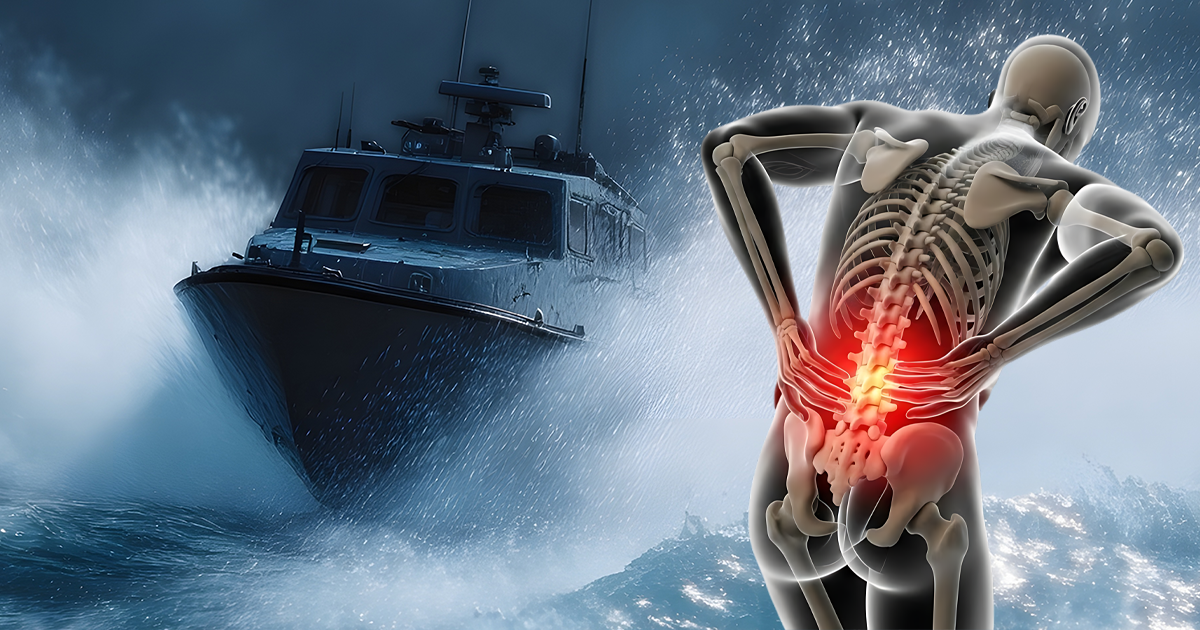
For years, a day out on a boat has been associated with a sore back caused by the continual battering from hitting waves. Whether it is the consistent beating from light chop, or the acute discomfort of slamming into big waves, boaters have battled with the unavoidable reality of wave impact, which is only magnified by the incredible amount of power hanging off the back of today’s pleasure boats.
That is what inspired the invention of the first Shockwave seat. The prototype was tested in a gruelling trip through the Northwest Passage by Shockwave founder and president David Smith in 2001.
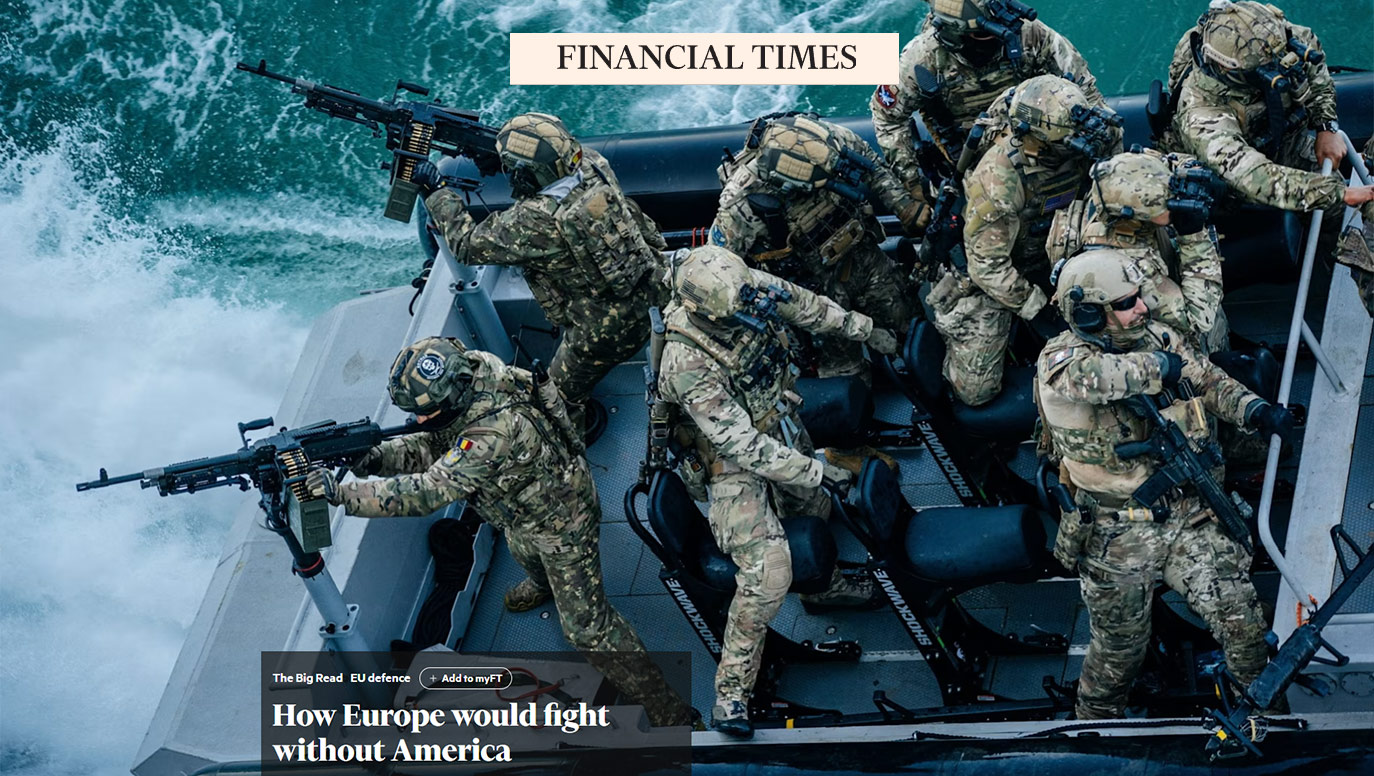
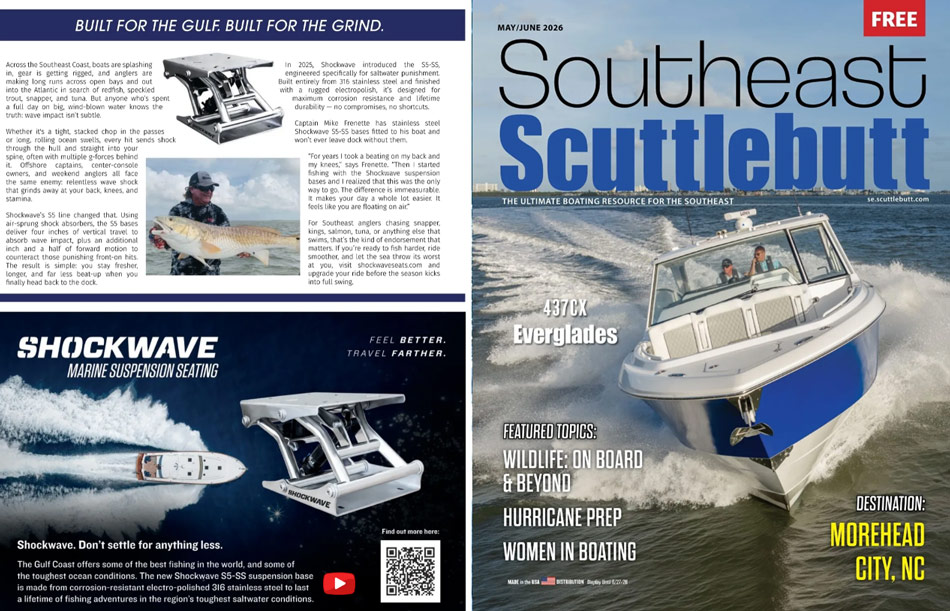
Since then Shockwave Seats has become the industry standard for marine shock mitigation and used worldwide by military and professional mariners. The tried-and-trusted technology became available to non-commercial boaters with the release of Shockwave’s first recreational suspension bases in 2016.
The success of Shockwave Seats is rooted in a commitment to research, development and testing. Rigorous testing on the Shockwave test boat focussed on the recreational S5 base to assess just how much wave impact was absorbed by the suspension base, and whether this allowed the average boater to spend more time on the water.
The deck on the Shockwave test boat, measured impacts of up to 3.6 g’s, but our 175lb test pilot, using a Shockwave S5 suspension base and seat only experienced a maximum hit of 1.4 g’s.
When analyzed as a Time To Limit Value (TTLV), to calculate* how much longer you can sit in the boat before you absorb the same amount of Whole Body Vibration (WBV) as someone sitting on the deck, the Shockwave seat returned an improvement factor of 11:1. That allows the everyday boater using a Shockwave suspension base to stay out on the water eleven times longer.
Living up to its promise to allow boaters to Feel Better and Travel Farther, Shockwave Seats continue to push the boundaries of marine shock mitigation, making a day on the water safer and a lot more comfortable for recreational boaters.
* Calculations based on NDP71/R295